

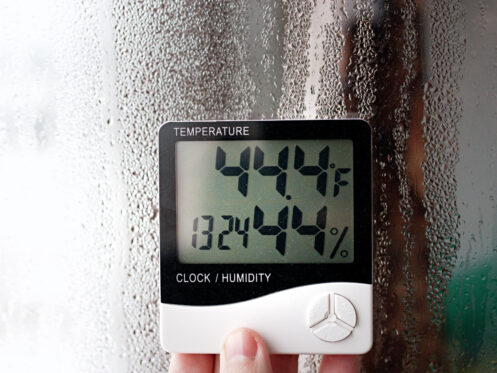
As temperatures begin to rise in Clackamas, OR, humidity will also increase. Warmer air can hold more moisture than colder air because it has a higher kinetic energy that allows water to remain in a gaseous, vaporized state. Add Oregon’s persistent spring rain to the mix, and you have a steady source of moisture entering the home through infiltration, ventilation, and everyday activities. Here’s how you can use your HVAC system to maintain a comfortable indoor environment despite the constant moisture influx spring weather brings.
High Humidity and Its Dangers
Water vapor being present in the air can be beneficial. Your skin, hair, respiratory system, eyes, and general well-being depend on it. In fact, even your property and belongings benefit from some water vapor in the air. Wood, fabrics, and finishes stay more stable when they are not overly dry. However, too much moisture can be dangerous. Relative humidity should be between 35% and 50% inside your home. Higher than normal levels of humidity can cause several problems.
Increased Allergy Symptoms
High humidity creates favorable conditions that allow dust mites and mold to thrive. Building materials can also release more volatile organic compounds (VOCs) when the air is saturated with moisture. These allergens can trigger allergic reactions such as sneezing, watery eyes, itching, and nasal and respiratory congestion.
Individuals with pre-existing allergies, asthma, or chronic obstructive pulmonary disease (COPD) are more vulnerable when humidity is high. Their airways are already more reactive, and the combination of biological allergens and chemical irritants can intensify symptoms. Breathing may feel more labored, flare-ups become more frequent, and recovery from irritation takes longer.
Chronic Fatigue and Heart Problems
Sweating is the primary and most effective way the human body regulates its temperature and cools down. When the air is saturated, sweat will not evaporate as easily, which means heat cannot leave the body efficiently. The heart compensates by pumping harder to move blood toward the skin’s surface to release heat. This extra effort leads to exhaustion, dizziness, and a persistent feeling of being overheated. Left unchecked, it can contribute to heat stroke, seizures, and heart attacks.
Disruption of Sleep
When the air feels heavy and humid, the body has a harder time cooling itself enough to enter deeper stages of sleep. Lack of proper sleep causes daytime fatigue, irritability, reduced concentration, hormone imbalance, and the likelihood of sickness and premature death.
Wood and Structural Damage
Wood is a hygroscopic material. This means it constantly absorbs and releases moisture to reach equilibrium with the water level of its environment. Therefore, if there is too much water vapor in the air, wood will absorb more moisture than it can safely accommodate. As the fibers swell, the material begins to expand, and this expansion can cause floorboards to cup, doors to stick, and cabinetry to lose its precise fit. Over time, the repeated cycle of swelling during humid periods and shrinking when the air dries out weakens the structure of the wood. You may notice warping, cracking, and permanent distortion.
Other porous materials in your home experience similar stress. Drywall can soften, paint may begin to bubble or peel, and fabrics can take on a damp, musty odor that is difficult to remove. Even items that appear solid, such as books, photographs, and musical instruments, are vulnerable to damage in high humidity.
Experiencing Electronics Failure
Metallic components inside your devices, including those within your HVAC system, are susceptible to corrosion when exposed to prolonged moisture. Circuit boards, wiring, and connectors can oxidize or short out, increasing the likelihood of sudden failure. Moisture can also cause condensation inside sensitive components, leading to erratic behavior or permanent damage.
How Your HVAC System Can Help Manage High Humidity
Your conventional air conditioner or mini‑split system can help control humidity in your home. As previously stated, warm air can hold more water vapor than cold air. When your system pulls warm indoor air across cold evaporator coils, the temperature of that air drops. As the air cools, it can no longer hold the same amount of moisture. The excess water vapor condenses on the coils and drains away through the condensate line.
For optimal results, your HVAC system must be properly sized and well-maintained. The filters should be clean so air can move freely throughout your home. The blower motor must be well lubricated and efficient enough to pull the heavier warm air across the evaporator coil. If airflow is restricted, the system cannot remove moisture effectively because the air does not spend enough time in contact with the cold coil surface. Refrigerant levels also need to be correct, since low refrigerant levels reduce the coil’s ability to cool the air and limit how much moisture can condense.
A system that is too large for the home will cool the air quickly and shut off before it has time to remove meaningful moisture. A correctly sized system runs longer, steadier cycles that allow the evaporator coil to stay cold long enough to pull sufficient water vapor from the air. This is especially important during mild spring weather, when temperatures may not be high enough to trigger long cooling cycles on their own.
Schedule professional cooling system maintenance in early spring before humidity begins to rise. Someone from our team will clean the coils, check refrigerant levels, verify airflow, and ensure the system is operating at peak efficiency.
It is also very important that you stay on top of repairs. A malfunctioning system is less effective and less efficient at conditioning air. Even one small, normal problem, such as frozen coils, can affect the integrity and performance of the entire system. To elaborate, when coils freeze, airflow becomes restricted, refrigerant cannot absorb heat properly, and the system loses its ability to remove moisture from the air. What began as a minor issue has quickly escalated into compressor strain, water damage from melting ice, and extended periods of poor humidity control.
The common signs that your cooling system needs immediate repairs include the following.
Weak or Warm Airflow
If the airflow velocity is low, the system is not moving enough air across the evaporator coil to remove heat and moisture effectively. This often points to issues such as a failing blower motor, clogged filters, blocked return vents, or developing refrigerant problems.
Strange Noises
Rattling, buzzing, grinding, or clicking sounds usually indicate loose components, electrical issues, or mechanical wear inside the system. These noises often appear before a major failure. Turn off your AC immediately and call for professional help.
Water Leaks
Your cooling system naturally produces condensation, but that water should drain away through the condensate line. If you see water pooling around the indoor unit or dripping from the air handler, it means the condensate line is clogged or the drain pan is cracked.
Reach Out to Us Today for Professional Help
Midway Heating Company is a trusted, family‑owned HVAC company serving communities in the Portland‑metro area since 1959. We can help prime your HVAC system to effectively manage humidity and keep your home comfortable throughout Oregon’s rainy spring season. Reach out to us anytime, as we are available 24/7. Call Midway Heating Company today for help regulating humidity in your Clackamas home.
